Mixed media and interaction; Instructions that people do look at!
Author
Remco Guijs

With my new dryer, I received a manual two fingers thick. Full of blocks of text, unclear icons, and complicated flowcharts. That went straight into the trash can. I typed the model type into YouTube and found a short, clear video with straightforward steps and animations within a minute. Problem solved.
Recognizable? It is actually strange that in business we often still choose those old-fashioned explanations full of text. While in our daily lives, we are already used to quick, visual explanations. Whether it’s an installation instruction for customers, safety rules for visitors, or an onboarding training for new colleagues—just text is simply not enough anymore.
When I got my new dryer, I received a manual two fingers thick. Full of text, unclear icons, and complicated step-by-step instructions. That went straight into the trash. I typed in the model type on YouTube and found within a minute a short, clear video with straightforward steps and animations. Problem solved.
Familiar? It’s actually strange that we in the business world still often choose those old-fashioned explanations full of text. While in our daily lives, we have long been accustomed to quick, visual explanations. Whether it’s an installation instruction for customers, safety rules for visitors, or an onboarding training for new colleagues—text alone is simply no longer enough.
People learn differently, so explaining must also be different.
We live in a time where explaining with media plays an increasingly important role (Thomson, Bridgstock, & Willems, 2014). Not only in education but also in business. Video is a well-known example of this. But you can go even further by adding animations, interaction, or even gamification. This way, information not only sticks better but also makes learning a lot more enjoyable.
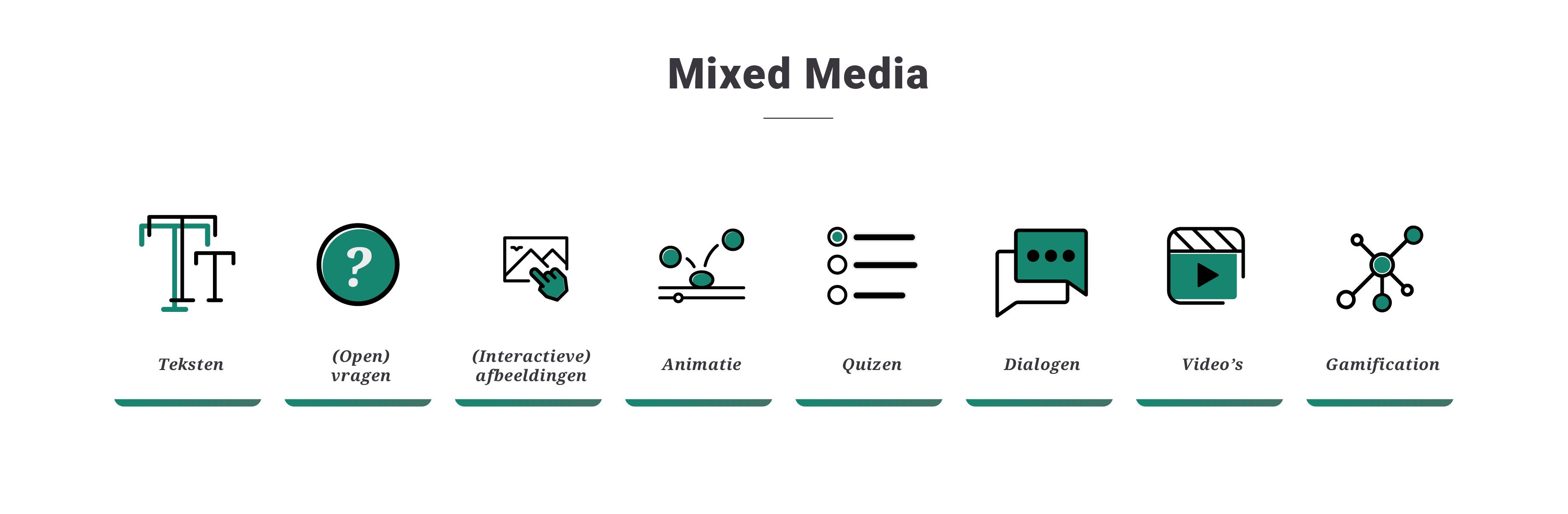
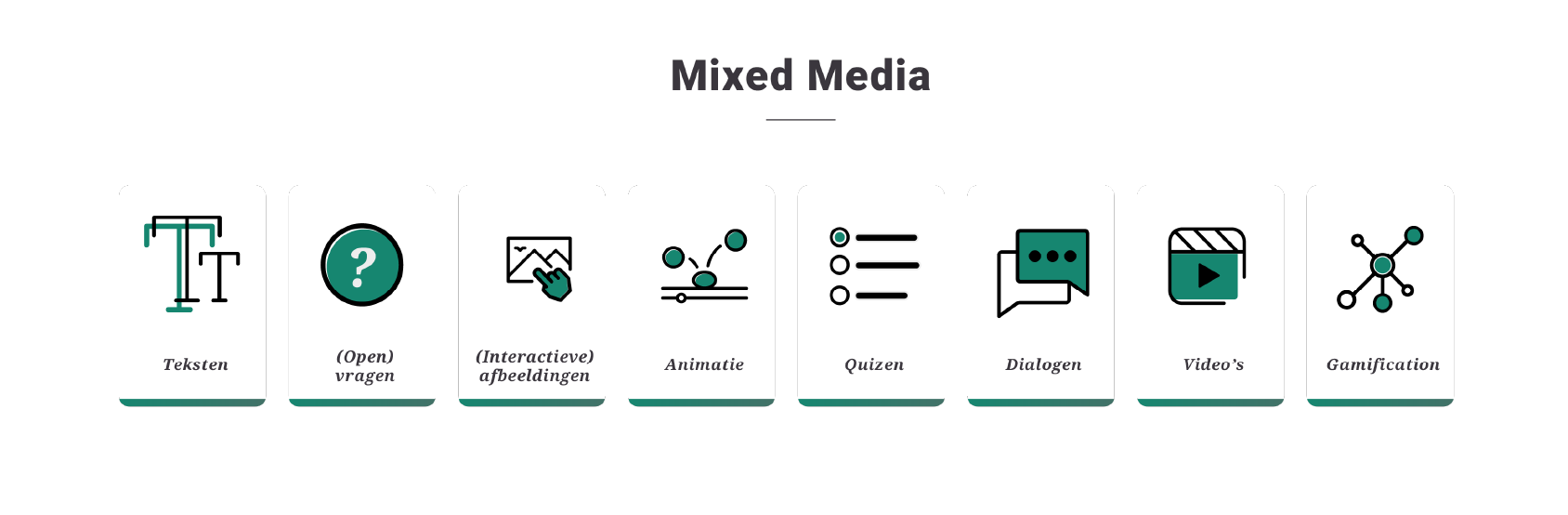
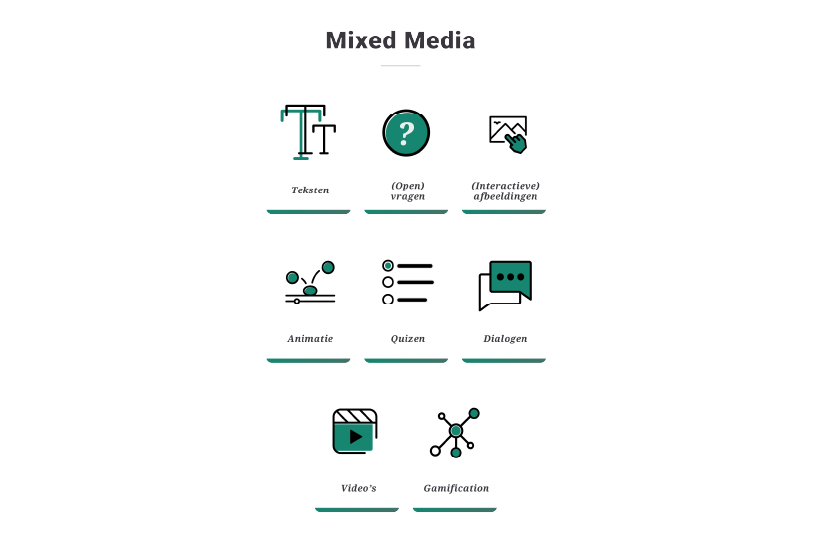
This is exactly what mixed media is about: cleverly combining different forms of explanation. It is not about either a video or text or a quiz. It is about both and. That variety ensures that people understand what you mean faster, participate more actively, and remember the content better.
We live in a time where explaining with media plays an increasingly larger role (Thomson, Bridgstock, & Willems, 2014). Not only in education but also in business. Video is a well-known example of this. However, you can go even further by adding animations, interaction, or even gamification. This way, information not only sticks better but learning also becomes a lot more fun.
This is exactly what mixed media is all about: smartly combining different forms of explanation. It's not about either a video or text or a quiz. It's about both and. This variation ensures that people understand what you mean faster, participate more actively, and remember the content better.
Better explaining with mixed media and interaction
Knowledge is conveyed better and faster
A strong image often says more than a thousand words. A clear video or a smart infographic conveys complex information faster than a thick manual. Moreover, it saves your audience time, as learning simply occurs faster. And time is money.People stay engaged longer
Variety keeps people awake. Especially for practically-minded employees, it is essential that the explanation is varied and interactive. Think of interactive videos, quizzes, or tasks that actively engage viewers. This way, you extend the tension arc and prevent people from dropping off halfway.You address different learning preferences
Some learn by watching, others by doing or listening. Mixed media combines all of this, so everyone is addressed in their own way. This also activates multiple areas of the brain simultaneously, making the content stick better.You truly engage the brain
By adding interactive elements, you actively involve people in learning. A quiz, a game, or an interactive video ensures that people not only consume but also think, apply, and discover for themselves.
Better explanation with mixed media and interaction
Knowledge is conveyed better and faster
A strong image often says more than a thousand words. A clear video or a smart infographic conveys complex information faster than a thick manual. Moreover, it saves your audience time, as learning simply happens faster. And time is money.People stay engaged longer
Variety keeps people awake. Especially for practically oriented employees, it is essential that the explanation is varied and interactive. Think of interactive videos, quizzes, or assignments that make your viewers actively think along. This extends the tension span and prevents people from dropping out halfway.You address different learning preferences
Some learn by watching, others by doing or listening. Mixed media combines all of that, so everyone is addressed in their own way. This also activates multiple brain areas simultaneously, which helps the content stick better.You really engage the brain
By adding interactive elements, you actively involve people in the learning process. A quiz, a game, or an interactive video ensures that people not only consume but also think, apply, and discover for themselves.
"Go for mixed media. Not just because it's trendy, but because it works."
"Go for mixed media. Not just because it's trendy, but because it works."
How to Apply This in Practice
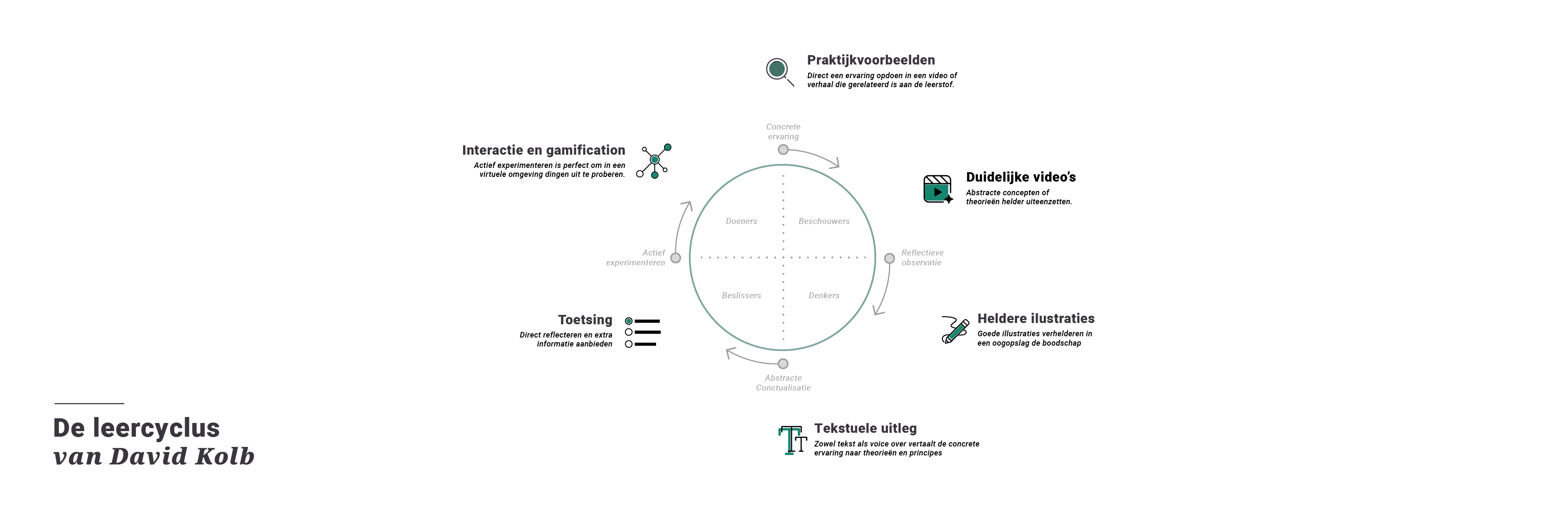
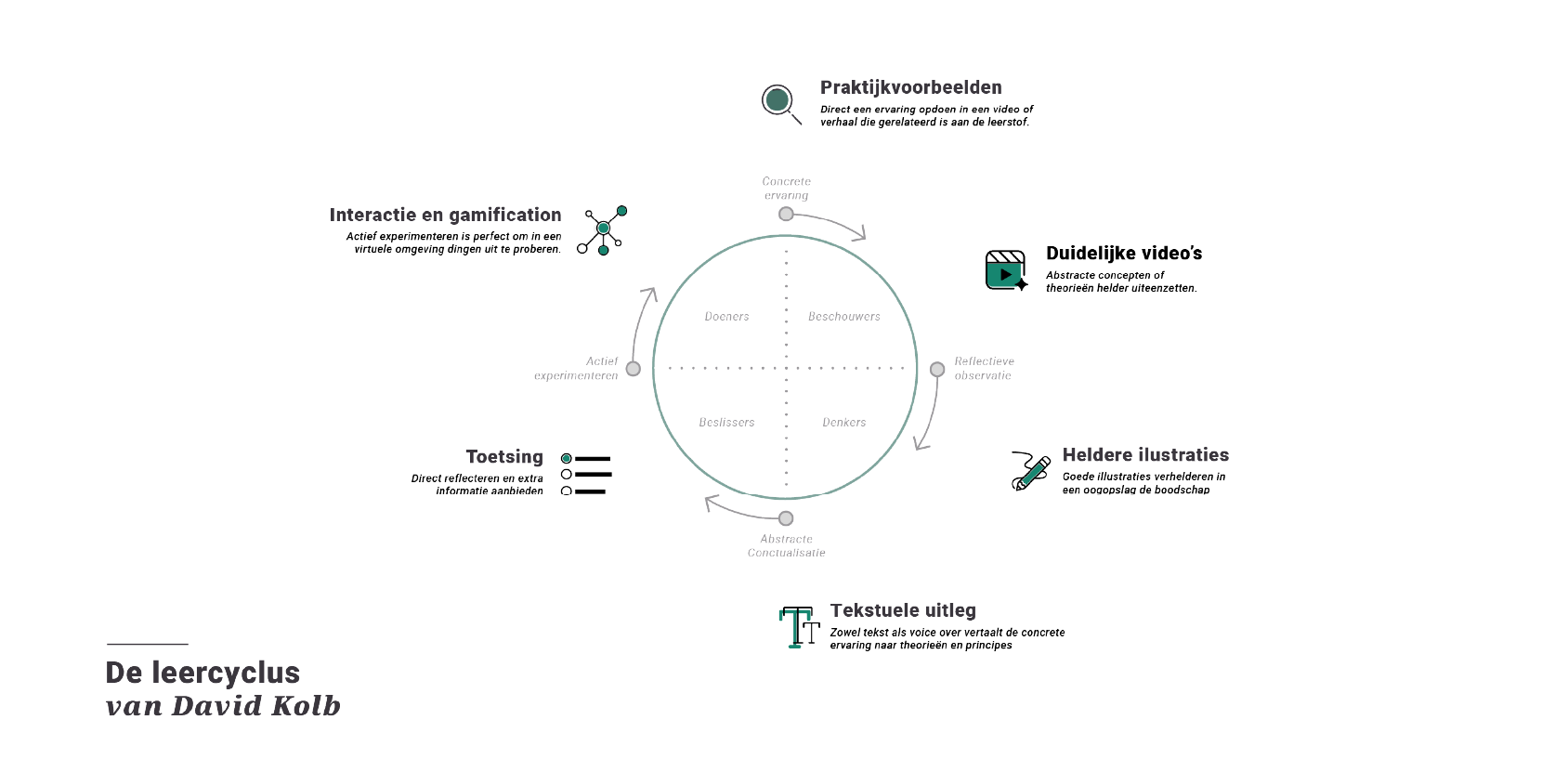
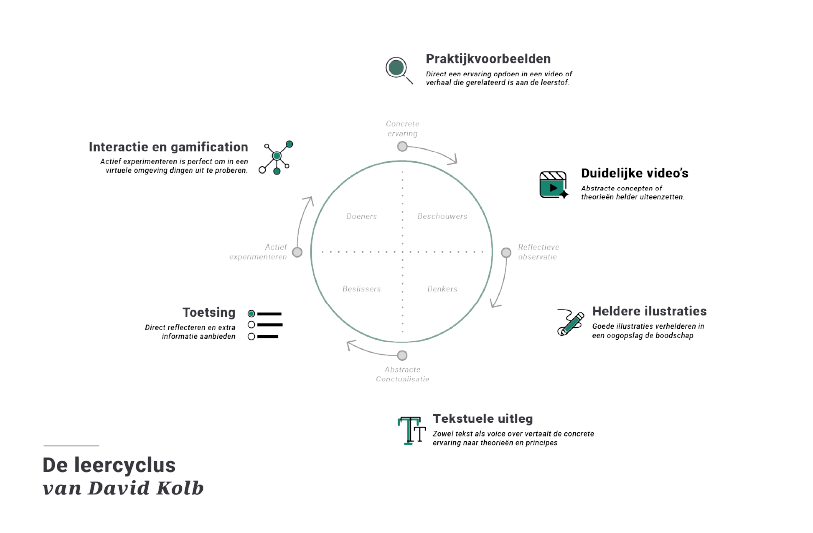
Do you want your explanation to stick? According to Kolb's learning process, you must go through four phases to truly learn something: experiencing, reflecting, conceptualizing, and experimenting. And you can apply this well with mixed media.
For example, start with a recognizable situation (like a common mistake), then explain the corresponding concept in a short video or animation, and finally have people practice through a quiz or interactive assignment. This way, they naturally go through the phases of learning: experiencing, understanding, practicing, applying.
This is how you apply it in practice
Do you want your explanation to stick? According to Kolb's learning process, you need to go through four phases to really learn something: experiencing, reflecting, conceptualizing, and experimenting. And you can apply this well with mixed media.
Start for example with a recognizable situation (like a common mistake), then explain the corresponding concept in a short video or animation, and finally let people practice through a quiz or interactive assignment. This way, they naturally walk through the phases of learning: experiencing, understanding, practicing, applying.
Done with explanations that nobody reads?
In short: do you want your instructions, training, or onboarding programs not to go straight into the digital trash bin? Then go for mixed media. Not only because it's trendy, but because it works. It leads to better explanations, more engagement, and a higher learning outcome.
And the best part? You really don’t have to figure everything out yourself. There are plenty of tools and formats to start using mixed media in your organization today. Start small, test what works, and build it up.
Done with explanations that no one reads?
In short: do you want your instructions, training sessions, or onboarding programs not to go straight into the digital trash? Then opt for mixed media. Not only because it's trendy, but because it works. It ensures better explanations, more engagement, and a higher learning yield.
And the great thing? You really don’t have to figure everything out yourself. There are plenty of tools and formats to start using mixed media in your organization today. Start small, test what works, and expand it.
About the author
Remco Guijs MSc combines expertise in both marketing and engineering, enabling him to translate complex technical information into powerful and effective visual concepts.
Curious about how visual communication can strengthen your business?
Remco Guijs
founder

About the author
Remco Guijs MSc combines expertise in both marketing and engineering, enabling him to translate complex technical information into powerful and effective visual concepts.
Curious about how visual communication can strengthen your business?
Remco Guijs
founder
About the author
Remco Guijs MSc combines expertise in both marketing and engineering, enabling him to translate complex technical information into powerful and effective visual concepts.
Curious about how visual communication can strengthen your business?
Remco Guijs
founder